

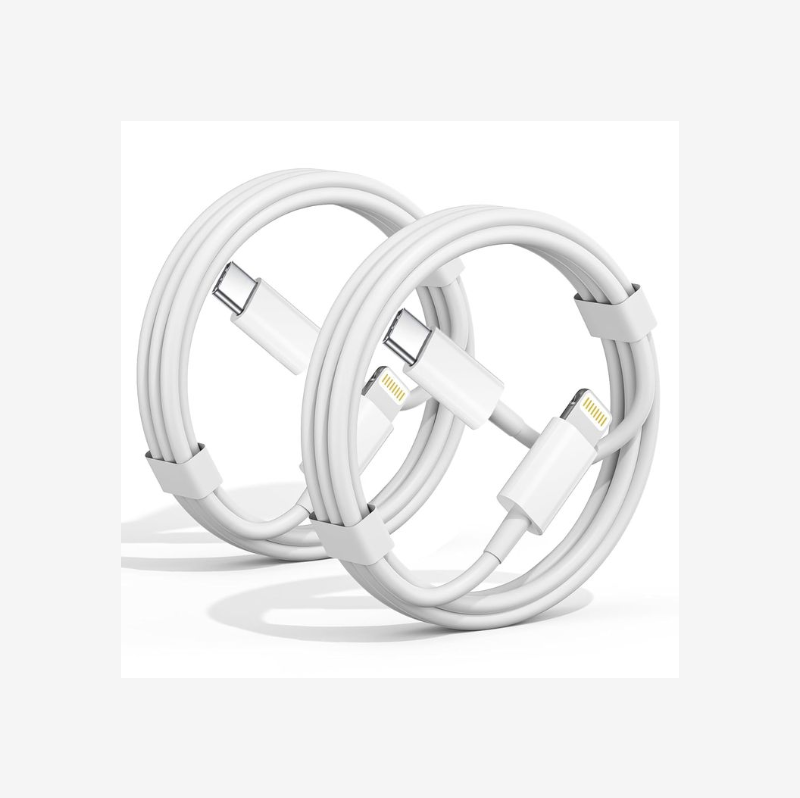
Apple offers several USB-C to USB-C cables with different specifications, primarily differentiated by their power delivery and data transfer capabilities. Standard charge cables support up to 60W power delivery and USB 2 data speeds, while more advanced cables like the woven 240W version support up to 240W and specialized cables can support Thunderbolt 3 (USB-C) speeds of up to 40 Gbps for high-speed data transfer.
Standard USB-C Charge Cables:
- Power Delivery: Up to 60 watts (W).
- Data Transfer: USB 2 speeds.
- Purpose: Charging and basic data syncing between USB-C devices.
Higher-Wattage USB-C Charge Cables:
- Power Delivery: Up to 240 watts (W) for compatible devices and power adapters.
- Data Transfer: USB 2 speeds (check specific product details for higher speeds).
- Purpose: Charging high-power devices like laptops at their maximum speed.
Thunderbolt 3 (USB-C) Cables:
- Power Delivery: Can support the wattage requirements of the connected devices and power adapter.
- Data Transfer: Up to 40 Gbps for Thunderbolt 3 devices, or up to 10 Gbps for USB 3.1 Gen 2 devices.
- Purpose: High-speed data transfer to external hard drives, docks, and displays.
Key considerations:
- Matching specs is crucial: For optimal performance, a cable’s specifications (especially wattage) should match or exceed the requirements of both the power adapter and the device being charged.
- Identify by purpose: Choose a cable based on your primary need—a standard charge cable for basic charging, a higher wattage cable for fast charging laptops, or a Thunderbolt 3 (USB-C) cable for high-speed data transfer.






Reviews
There are no reviews yet.